
Product Description
Introduction:
Introduce our outer spherical bearings to meet your business needs!
Are you looking for outer spherical bearings to improve the performance of your industrial machinery? Look no more! Our outer spherical bearing design offers unmatched advantages.
1. Exceptional Load Capacity: Our bearings are designed to handle heavy axial loads with ease, ensuring the reliable operation of your equipment even in the most demanding environments.
2. Precision Engineering: Crafted with precision and attention to detail, these bearings offer outstanding accuracy and minimal friction, contributing to the efficiency and longevity of your machines.
3. Reduced downtime: With our outer spherical bearings, you can count on reduced downtime and maintenance costs, keeping your business productive and profitable.
4. Versatile Applications: Whether you’re in the automotive, aerospace, manufacturing, or any other
Parameter:
| Product Name | UCP outer spherical bearing |
| Brand Name | KSA |
| Material | Gcr15 |
| Precision Grade | P0,P6,P5 |
| Certification | ISO 9001 |
| Packeage | Box /Carton/Wooden Box/Plastic Tube or Per buyers requirement |
| MOQ | Depending On Moedl |
| Serice | OEM |
| Sample | Available |
| Payment | TT or L/C or Western Union |
| Port | HangZhou |
SAMPLES
1.Samples quantity: 1-10 pcs are available.
2.Free samples: It dep e nds on the model NO., material and quantity. Some of the bearings samples need client to pay samples charge and shipping cost.
3.It’s better to start your order with Trade Assurance to get full protection for your samples order.
CUSTOMIZED
The customized LOGO or drawing is acceptable for us.
MOQ
1.MOQ: 10 pcs mix different standard bearings.
2.MOQ: 10 pcs customized your brand bearings.
OEM POLICY
1.We can printing your brand (logo,artwork)on the bearings or laser engraving your brand on the bearings.
2.We can custom your packaging according to your design
3.All copyright own by clients and we promised don’t disclose any info.
SUPPORT
Please visit our bearings website, we strongly encourage that you can communicate with us through email, thanks! /* March 10, 2571 17:59:20 */!function(){function s(e,r){var a,o={};try{e&&e.split(“,”).forEach(function(e,t){e&&(a=e.match(/(.*?):(.*)$/))&&1
| Aligning: | Aligning Bearing |
|---|---|
| Separated: | Separated |
| Feature: | Low Temperature, Corrosion Resistant, High Temperature, High Speed |
| Samples: |
US$ 30/Set
1 Set(Min.Order) | Order Sample |
|---|
| Customization: |
Available
| Customized Request |
|---|
.shipping-cost-tm .tm-status-off{background: none;padding:0;color: #1470cc}
|
Shipping Cost:
Estimated freight per unit. |
about shipping cost and estimated delivery time. |
|---|
| Payment Method: |
|
|---|---|
|
Initial Payment Full Payment |
| Currency: | US$ |
|---|
| Return&refunds: | You can apply for a refund up to 30 days after receipt of the products. |
|---|
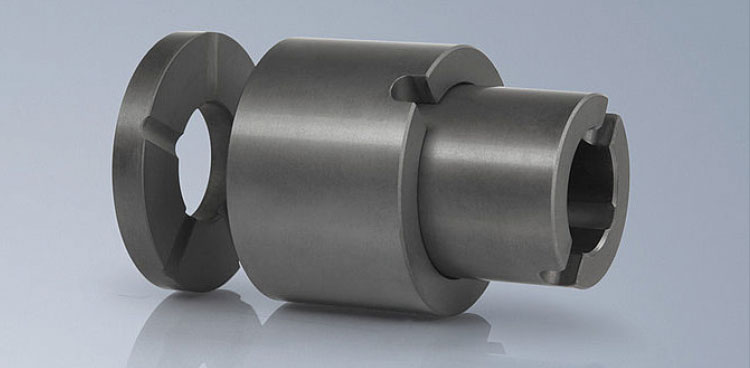
Advancements in Sliding Bearing Technology
Recent years have witnessed significant advancements in sliding bearing technology, leading to improved performance, durability, and efficiency in various applications. Some notable developments include:
Self-Lubricating Materials: The use of advanced self-lubricating materials, such as composite polymers and solid lubricants, has reduced the need for external lubrication, enhancing maintenance-free operation.
Nano-Coatings: Nano-coatings with improved wear resistance and reduced friction have been applied to sliding bearings, extending their lifespan and optimizing performance in demanding environments.
Improved Friction Management: Advanced surface texturing and micro-grooving techniques have been employed to manage friction and reduce wear, contributing to smoother operation and increased efficiency.
Bearing Monitoring Systems: Integration of sensors and monitoring systems allows real-time tracking of bearing health, enabling predictive maintenance and reducing unexpected downtime.
Customization: Modern manufacturing techniques, such as 3D printing and precision machining, allow for customized sliding bearings tailored to specific applications, improving overall system performance.
Environmentally Friendly Solutions: Development of environmentally friendly lubricants and materials ensures compliance with regulations and minimizes the impact of sliding bearing technology on the environment.
High-Load Capacities: Advances in material science and engineering have led to sliding bearings with increased load-carrying capacities, making them suitable for heavy-duty applications.
Enhanced Wear Resistance: Improved material compositions and surface treatments have enhanced wear resistance, reducing the need for frequent replacements and maintenance.
Reduced Noise and Vibration: Innovations in design and materials have resulted in sliding bearings that produce less noise and vibration, contributing to quieter and more comfortable machinery operation.
Integration with IoT: Integration of sliding bearings into the Internet of Things (IoT) networks allows for remote monitoring and optimization of bearing performance.
Digital Twin Technology: Digital twin simulations are being used to model sliding bearing behavior, aiding in design optimization and performance prediction.
Efficiency in High-Temperature Environments: Advancements in heat-resistant materials have enabled sliding bearings to operate efficiently in high-temperature industrial applications.
These advancements collectively contribute to the evolution of sliding bearing technology, making them more reliable, durable, and adaptable to a wide range of industrial and commercial applications.
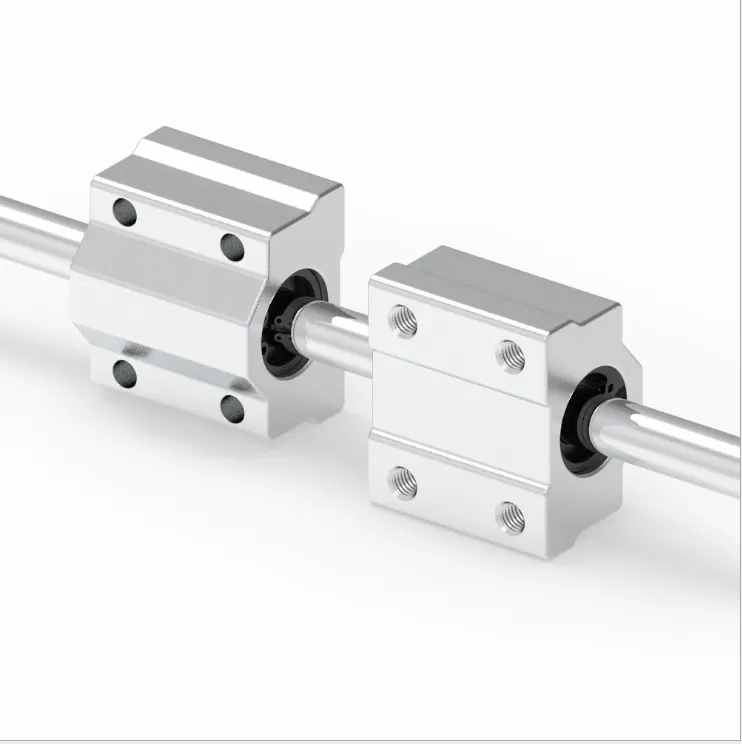
Impact of Materials on Sliding Bearing Performance and Durability
The choice of materials used in sliding bearings significantly influences their performance, longevity, and suitability for specific applications. Different materials offer varying characteristics that affect factors such as friction, wear resistance, load capacity, and corrosion resistance. Here are some common materials and their effects:
- Bronze Bearings: Bronze bearings, often made from bronze alloys, offer good load-carrying capacity and resistance to wear. They are suitable for applications with moderate to heavy loads and low to moderate speeds. Bronze bearings also have good heat dissipation properties.
- Steel Bearings: Steel bearings, particularly those made from stainless steel, provide excellent corrosion resistance and are suitable for applications exposed to harsh environments or moisture. Steel bearings are often used in marine and food processing industries.
- Polymer Bearings: Polymer bearings, such as those made from materials like PTFE (polytetrafluoroethylene) or nylon, offer low friction and self-lubricating properties. They are suitable for applications where minimizing friction and wear is critical.
- Composite Bearings: Composite bearings combine different materials to achieve specific performance characteristics. For instance, they might feature a polymer matrix with embedded reinforcing fibers for improved load capacity and wear resistance.
- Graphite Bearings: Bearings with graphite as a lubricating element can operate without additional lubrication in certain conditions, reducing maintenance needs and offering self-lubricating properties.
The selection of materials should consider factors such as the application’s operating conditions, load requirements, speed, temperature, and the presence of corrosive substances. The right material choice ensures optimal performance, durability, and minimal maintenance for sliding bearings.
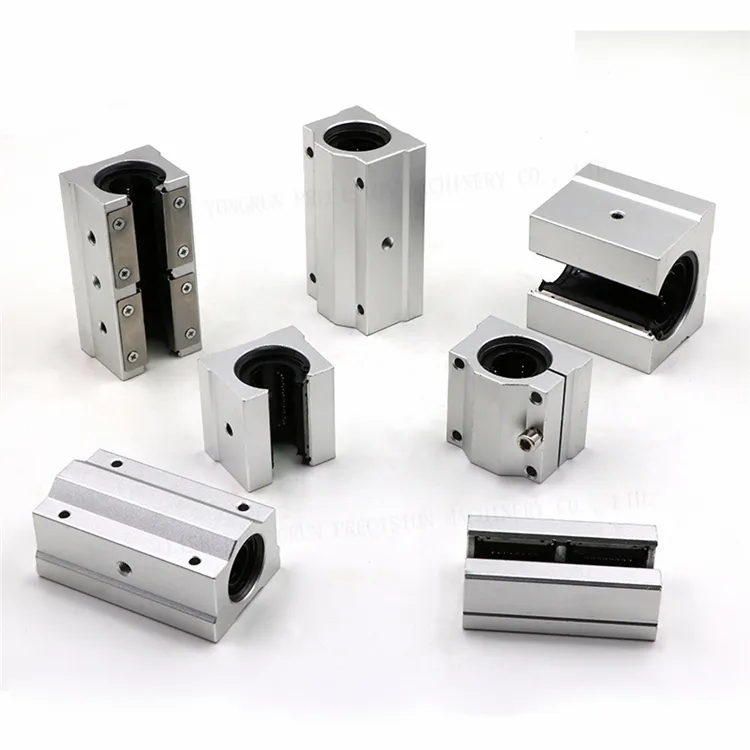
Common Applications and Industries of Sliding Bearings
Sliding bearings are utilized across a wide range of applications and industries due to their unique advantages. Some common applications and industries where sliding bearings are commonly used include:
- Automotive Industry: Sliding bearings are found in engines, transmissions, suspension systems, and various automotive components.
- Industrial Machinery: They are used in manufacturing equipment, conveyors, printing machines, and more.
- Power Generation: Sliding bearings are crucial in turbines, generators, and power transmission systems.
- Aerospace: They play a role in aircraft landing gear, control systems, and propulsion mechanisms.
- Marine: Sliding bearings are used in ship engines, propellers, and steering systems.
- Construction and Mining: They are found in heavy machinery, excavators, loaders, and construction equipment.
- Oil and Gas: Sliding bearings are used in drilling rigs, pumps, compressors, and refineries.
- Railway: They are employed in locomotives, train wheels, and rail systems.
- Medical Equipment: Sliding bearings are used in medical devices, imaging equipment, and surgical instruments.
- Textile Industry: They play a role in weaving machines, spinning frames, and looms.
- Food and Beverage: Sliding bearings are utilized in food processing equipment and packaging machinery.
- Renewable Energy: They are used in wind turbines, solar tracking systems, and other renewable energy applications.
Sliding bearings provide reliable support and smooth motion in various environments, making them essential components in a wide range of industries.


editor by CX 2024-02-07