
Product Description
Select size SA8-SA30T/K Fish Eye Rod End Joint Bearing Right External Thread SA10T/K
| Cylindrical Roller Bearings
|
Spherical Roller Bearings |
Needle Roller Bearings |
| Tapered Roller Bearings
|
Crossed Slewing bearing | Thrust Roller Bearings |
Male rod ends are available in both left and right-hand configurations, featuring steel on steel contact surfaces. Rod ends with bore diameters ranging from 6mm to 12mm do not have a relubrication facility due to their load ratings. However, they can be relubricated on the side of the ball when rotated.
On the other hand, rod ends with bore diameters of 15mm and above do come with a relubrication facility.
Rod ends are capable of supporting radial forces in both tensile and compressive directions, facilitating the transmission of motions and forces with minimal movement. They are particularly suitable for applications involving alternating radial loads and, under specific conditions, unilateral loads. The eye housing’s thin wall design allows for compact adjacent constructions.
These rod ends can operate within a temperature range of -60°C to +200°C. It should be noted that for temperatures below 0°C, a reduction in load-carrying capacity must be considered. As these rod ends require lubrication, regular maintenance is necessary.
Detailed Photos
Products Details
More Products
Packaging & Shipping
| Packaging | |
| 1)Commercial Bearings packaging: 1pc/plastic bag + color box + carton + pallet | |
| 2)Industrial Bearings packaging | |
| 3)According to the requirement of customers | |
| Payment | |
| 1) T/T:30% deposit, 70% should be paid before shipment. | |
| 2) L/C at sight. (high bank charge, not suggested, but acceptable ) | |
| 3) 100% Western Union in advance. (especially for air shipment or small amounts) | |
| Delivery | |
| 1) Less than 45 KGS, we will send by express. ( Door to Door, Convenient ) | |
| 2) Between 45 – 200 KGS, we will send by air transport. ( Fastest and safest, but expensive ) | |
| 3) More than 200 KGS, we will send by sea. ( Cheapest, but long time ) | |
Our Advantages
1. FREE SAMPLES: contact us by email or trade manager, and we will send the free samples according to your request.
2. World-Class Bearing: We provide our customers with all types of bearings of world-class quality.
3. OEM or Non-Stand Bearings: Any requirement for Non-standard bearings is Easily Fulfilled by us due to our vast knowledge and links in the industry.
4. Genuine products With Excellent Quality: Company has always proved the 100% quality products it provides with genuine intent.
5. After-Sales Service and Technical Assistance: Company provides after-sales service and technical assistance as per the customer’s requirements and needs.
6. Quick Delivery: The company provides just-in-time delivery with its streamlined supply chain.
7. Cost Saving: We provide long-life, shock-resistant, and high-reliability bearings with excellent quality and better performance. Resulting in increased cost savings.
8. Attending customer queries promptly: We believe that if customers are satisfied then it proves our worth well. Customers are always given quick support.
/* January 22, 2571 19:08:37 */!function(){function s(e,r){var a,o={};try{e&&e.split(“,”).forEach(function(e,t){e&&(a=e.match(/(.*?):(.*)$/))&&1
| Rolling Element: | Without Roller and Ball |
|---|---|
| Structure: | Rod End |
| Material: | Bearing Steel |
| Load Direction: | Thrust Spherical Plain Bearing |
| Add Lubricant: | Self-lubricating |
| Outer Structure: | Outer Ring of Single-Slit |
| Customization: |
Available
| Customized Request |
|---|
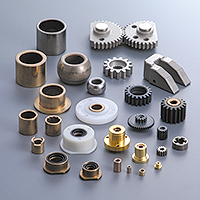
Role of Sliding Bearings in Vibration Dampening and Shock Absorption Applications
Sliding bearings are essential components in applications where vibration dampening and shock absorption are critical. Here’s how they fulfill this role:
Vibration Dampening:
In various industrial processes and equipment, vibrations can lead to reduced performance, increased wear and tear, and even structural damage. Sliding bearings help dampen vibrations by providing a cushioning effect between moving components. The design of sliding bearings allows them to absorb and dissipate vibrations, preventing them from propagating throughout the machinery.
Shock Absorption:
Heavy machinery and equipment often experience sudden impacts or shocks due to sudden loads or external forces. Sliding bearings with their ability to absorb shocks and impacts help protect machinery from damage. They act as buffers that absorb and distribute the energy generated by these shocks, preventing it from causing harm to other components or the machinery structure.
Isolation of Vibrations:
Sliding bearings can be strategically placed in machinery to isolate specific components or sections from vibrations. This isolation helps maintain the stability and accuracy of delicate components that might be sensitive to vibrations, such as precision instruments or measurement devices.
Enhanced Comfort:
In applications involving human interaction, such as vehicles or industrial tools, sliding bearings contribute to user comfort. By reducing vibrations and shocks transmitted to the operator or occupants, sliding bearings improve the overall user experience and reduce operator fatigue.
Prevention of Resonance:
Resonance is a phenomenon where vibrations can be amplified due to the natural frequencies of the components. Sliding bearings help prevent resonance by providing damping properties that counteract the amplification effect. This is crucial in applications where precise control and stability are required.
In conclusion, sliding bearings play a vital role in applications requiring vibration dampening and shock absorption. Their ability to dampen vibrations, absorb shocks, isolate vibrations, enhance comfort, and prevent resonance contributes to the efficient and reliable operation of machinery and equipment in various industries.
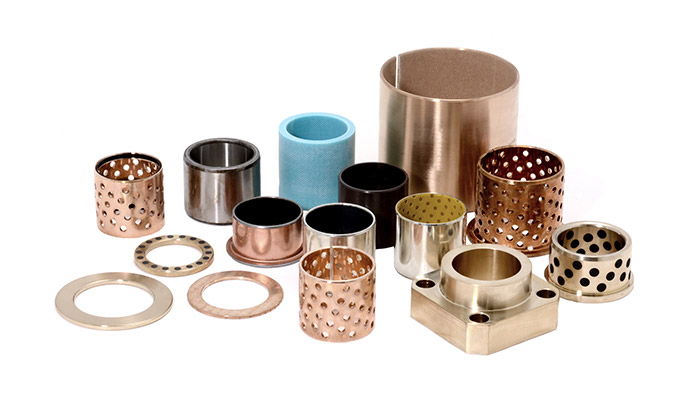
Signs of Wear or Damage in Sliding Bearings and Replacement Timing
Recognizing signs of wear or damage in sliding bearings is crucial for maintaining the performance and integrity of machinery and equipment. Here are the common signs to look for and the appropriate timing for replacement:
Increased Friction and Heat: If you notice higher levels of friction or heat around the bearing area, it could indicate that the bearing surfaces are experiencing excessive wear. Over time, this can lead to reduced efficiency and potentially cause further damage to the bearing and surrounding components.
Abnormal Noise: Unusual noises, such as grinding, squeaking, or knocking sounds, can indicate wear or damage within the sliding bearings. These noises are often caused by metal-to-metal contact or irregular movement of the bearing surfaces.
Uneven Wear Patterns: Inspect the bearing surfaces for uneven wear patterns, pitting, or scoring. These signs suggest that the bearing is not distributing the load properly, leading to localized damage and reduced performance.
Reduced Performance: If you notice a decline in the overall performance of the machinery or equipment, such as decreased output, slower operation, or reduced precision, it could be due to compromised sliding bearings.
Excessive Vibration: Excessive vibration can be a result of misaligned or damaged sliding bearings. Vibrations can affect the stability of the machinery and lead to premature wear of other components.
Visible Debris or Contamination: If you observe signs of debris, contaminants, or metal particles in the lubricant or around the bearing area, it could indicate wear or damage. Contaminants can accelerate wear and cause abrasive damage to the bearing surfaces.
Leakage of Lubricant: Sliding bearings often require proper lubrication to function effectively. If you notice a significant amount of lubricant leakage or seepage, it might be a sign that the bearing seals are compromised, which can lead to inadequate lubrication and accelerated wear.
Replacement Timing: It’s essential to replace sliding bearings as soon as signs of wear or damage are detected. Delaying replacement can lead to further deterioration, increased downtime, and potential damage to other components. Regular maintenance and inspections can help catch these issues early and prevent costly breakdowns.
Overall, monitoring the condition of sliding bearings through routine inspections and addressing signs of wear promptly can help ensure the longevity, efficiency, and reliability of machinery and equipment.
Sliding Bearings and Their Applications
Sliding bearings, also known as plain bearings or journal bearings, are a type of bearing that operate on the principle of sliding friction between two surfaces. They are utilized in various applications where rotational or linear movement needs to be facilitated while minimizing friction and wear. Here are some common applications of sliding bearings:
- Automotive Industry: Sliding bearings are widely used in engines and transmissions of vehicles to support rotating shafts and provide low-friction movement.
- Industrial Machinery: They are employed in industrial equipment such as pumps, compressors, and turbines, where they help in reducing friction and ensuring smooth operation.
- Aerospace: Sliding bearings are crucial components in aircraft engines, landing gear systems, and various aerospace mechanisms to provide reliable and low-wear motion.
- Power Generation: In power plants, sliding bearings are found in turbines, generators, and other rotating equipment to facilitate movement with minimal energy loss.
- Marine Applications: They are used in ship engines, propellers, and other marine equipment, providing durability in harsh marine environments.
- Construction Equipment: Sliding bearings are used in construction machinery like cranes and excavators to support heavy loads and ensure smooth movement.
- Heavy Industry: Various heavy industries, including mining and steel production, rely on sliding bearings for their robustness and ability to handle heavy loads.
- Home Appliances: Sliding bearings are found in appliances like washing machines and refrigerators, facilitating the movement of rotating parts.
- Medical Devices: Some medical devices use sliding bearings for their precision and low friction, ensuring accurate movement in equipment like medical scanners and robotic surgical systems.
Sliding bearings are chosen for applications where simplicity, cost-effectiveness, and reliable performance are essential. They come in different designs, such as plain cylindrical bearings, thrust bearings, and spherical bearings, to suit various motion requirements. Regular maintenance and proper lubrication are necessary to ensure the longevity and optimal performance of sliding bearings in their respective applications.


editor by CX 2024-04-03