
Product Description
Female Thread Rod Ends Bearing Maintenance Free(SI16-1T/K SI18T/K ST20T/K ST22T/K SI25T/K
SI28T/K SI30T/K SI30-1T/K SI35T/K SI40T/K SI50T/K)
Application
As a rule, rod ends are available with left or right-hand female or male threads. Rod ends have the sliding contact
surface combinations steel-on-steel, steel-on-bronze, steel-on-PTFE CZPT material, and steel-on-PTFE fabric.
Industrial Truck Parts Maintenance-Free Rod Ends Bearing
| Product Name | Rod Ends |
| Precision Rating | P6, P0, P5, P4, P2 |
| Material | Bearing Steel (GCr15) |
| Clearance | C0 C1 C2 C3 C4 C5 |
| Vibration & Noisy | Z1,Z2,Z3 V1,V2,V3 |
| Features | High Precision, High Speed, Long Life, High Reliability, Low Noise , Reduce Friction |
| Certification | ISO 9001:2008 |
| Packing | 1.Neutral Packing Bearing 2.Industrial Packing 3.Commercial Packing Bearing 4.Customize |
| Delivery Time | 30 – 45 Days After The Order is Confirmed |
| Shippment | 1.By Sea 2.By Air 3.By Express |
| Website | http://hlimachinery |
SI TK Series Maintenance-Free Rod Ends Bearing Specification
| Bearing | Dimensions (MM) | Load Ratings (KN) | Mass | ||||||||||||||
| d | d3 6H |
B | C1 | l3 min |
W | d2 | h1 | l4 | l5 | d4 | d5 | dk | α ≈ |
C | C0 | kg | |
| SI5T/K | 5 | M5x0.8 | 8 | 6.00 | 10 | 9 | 18 | 27 | 36.0 | 4.0 | 8.5 | 11 | 11.11 | 13 | 5.7 | 6.00 | 0.016 |
| SI6T/K | 6 | M6x1.0 | 9 | 6.75 | 12 | 11 | 20 | 30 | 40.0 | 5.0 | 10.0 | 13 | 12.70 | 13 | 7.2 | 7.65 | 0.571 |
| SI8T/K | 8 | M8x1.25 | 12 | 9.00 | 16 | 14 | 24 | 36 | 48.0 | 5.0 | 12.5 | 16 | 15.88 | 14 | 11.6 | 12.90 | 0.047 |
| SI10T/K | 10 | M10x1.5 | 14 | 10.50 | 20 | 17 | 28 | 43 | 57.0 | 6.5 | 15.0 | 19 | 19.05 | 13 | 14.5 | 18.00 | 0.077 |
| SI10-1T/K | 10 | M10x1.25 | 14 | 10.50 | 20 | 17 | 28 | 43 | 57.0 | 6.5 | 15.0 | 19 | 19.05 | 13 | 14.5 | 18.00 | 0.077 |
| SI12T/K | 12 | M12x1.75 | 16 | 12.00 | 22 | 19 | 32 | 50 | 66.0 | 6.5 | 17.5 | 22 | 22.23 | 13 | 17.0 | 24.00 | 0.100 |
| SI12-1T/K | 12 | M12x1.25 | 16 | 12.00 | 22 | 19 | 32 | 50 | 66.0 | 6.5 | 17.5 | 22 | 22.23 | 13 | 17.0 | 24.00 | 0.100 |
| SI14T/K | 14 | M14x2.0 | 19 | 13.50 | 25 | 22 | 36 | 57 | 75.0 | 8.0 | 20.0 | 25 | 25.40 | 16 | 24.0 | 31.00 | 0.160 |
| SI14-1T/K | 14 | M14x1.5 | 19 | 13.50 | 25 | 22 | 36 | 57 | 75.0 | 8.0 | 20.0 | 25 | 25.40 | 16 | 24.0 | 31.00 | 0.160 |
| SI16T/K | 16 | M16x2.0 | 21 | 15.00 | 28 | 22 | 42 | 64 | 85.0 | 8.0 | 22.0 | 27 | 28.58 | 15 | 28.5 | 39.00 | 0.220 |
| SI16-1T/K | 16 | M16x1.5 | 21 | 15.00 | 28 | 22 | 42 | 64 | 85.0 | 8.0 | 22.0 | 27 | 28.58 | 15 | 28.5 | 39.00 | 0.220 |
| SI18T/K | 18 | M18x1.5 | 23 | 16.50 | 32 | 27 | 44 | 71 | 93.0 | 10.0 | 25.0 | 31 | 31.75 | 15 | 42.5 | 47.50 | 0.320 |
| SI20T/K | 20 | M20x1.5 | 25 | 18.00 | 33 | 30 | 50 | 77 | 102.0 | 10.0 | 27.5 | 34 | 34.93 | 14 | 42.5 | 57.00 | 0.420 |
| SI22T/K | 22 | M22x1.5 | 28 | 20.00 | 37 | 32 | 54 | 84 | 111.0 | 12.0 | 30.0 | 38 | 38.10 | 15 | 57 | 68.00 | 0.540 |
| SI25T/K | 25 | M24x2.0 | 31 | 22.00 | 42 | 36 | 60 | 94 | 124.0 | 12.0 | 33.5 | 42 | 42.85 | 15 | 68.0 | 85.00 | 0.720 |
| SI28T/K | 28 | M27x2.0 | 35 | 24.00 | 51 | 41 | 66 | 103 | 136.0 | 14.0 | 37.0 | 46 | 47.60 | 15 | 86.0 | 107.00 | 0.820 |
| SI30T/K | 30 | M30x2.0 | 37 | 25.00 | 51 | 41 | 70 | 110 | 145.0 | 15.0 | 40.0 | 50 | 50.80 | 17 | 88.0 | 114.00 | 1.100 |
| SI30-1T/K | 30 | M27x2.0 | 37 | 25.00 | 51 | 41 | 70 | 110 | 145.0 | 15.0 | 40.0 | 50 | 50.80 | 17 | 88.0 | 114.00 | 1.100 |
| SI35T/K | 35 | M36x2.0 | 43 | 28.00 | 56 | 50 | 81 | 125 | 165.5 | 17.0 | 46.0 | 58 | 57.10 | 16 | – | – | 1.600 |
| SI40T/K | 40 | M42x2.0 | 49 | 33.00 | 60 | 55 | 91 | 142 | 187.5 | 19.0 | 53.0 | 65 | 66.60 | 17 | – | – | 2.400 |
| SI50T/K | 50 | M48x2.0 | 60 | 45.00 | 65 | 65 | 117 | 160 | 218.5 | 23.0 | 65.0 | 75 | 82.50 | 12 | – | – | 5.000 |
About Us
HENGLI Machinery Company is a well-established Chinese bearing supplier. We design, manufacture and wholesale bearings.
Our specialized manufacturer of Spherical Roller Bearing & Cylindrical Roller Bearing, XIHU (WEST LAKE) DIS. Rolling Bearing Co., Ltd
was established in 1970 and is accredited by the Chinese Ministry of Machine Building.
We invested in 2 additional specialized bearing factories, which allow us to provide our clients with top of the line products such
as Needle Roller Bearings, Spherical Plain Bearings, Rod Ends Bearings, Ball Joint Bearings, Tapered Roller Bearings,
Cam Follower Bearings, Thrust Bearings, Wheel Hub Bearings and Non-Standard Bearings.
FAQ
Q1 – What is our advantages?
A – Manufacturer – Do it only with the Best;
-Your Choice make different.
Q2 – Our Products
A – Spherical Roller Bearing, Cylindrical Roller Bearing, Needle Roller Bearing, Cam Followers, Thrust Bearing
– Spherical Plain Bearing, Rod End, Ball Joint, Wheel Hub, Tapered Roller Bearing
Q3 – Process of our production
A – Heat Treatment – Grinding – Parts Inspection – Assembly – Final Inspection – Packing
Q4 – How to customize bearing(non-standard) from your company?
A -We offer OEM,Customized(Non-standard) service and you need to provide drawing and detailed Technical Data.
Q5 – What should I care before installation?
A – Normally, the preservative with which new bearings are coated before leaving the factory does not need to be
removed; it is only necessary to wipe off the outside cylindrical surface and bore, if the grease is not compatible
with the preservative, it is necessary to wash and carefully dry the bearing.
-Bearings should be installed in a dry, dust-free room away from metal working or other machines producing
swarf and dust.
Q6 – How to stock and maintenance my bearings right?
A – Do not store bearings directly on concrete floors, where water can condense and collect on the bearing;
-Store the bearings on a pallet or shelf, in an area where the bearings will not be subjected to high humidity
or sudden and severe temperature changes that may result in condensation forming;
-Always put oiled paper or, if not available, plastic sheets between rollers and cup races of tapered roller bearings.
/* January 22, 2571 19:08:37 */!function(){function s(e,r){var a,o={};try{e&&e.split(“,”).forEach(function(e,t){e&&(a=e.match(/(.*?):(.*)$/))&&1
| Rolling Element: | Single Row |
|---|---|
| Structure: | Rod End |
| Material: | Bearing Steel |
| Load Direction: | Radial Spherical Plain Bearing |
| Add Lubricant: | Self-lubricating |
| Outer Structure: | Whole Outer Ring |
| Samples: |
US$ 1/Piece
1 Piece(Min.Order) | |
|---|
| Customization: |
Available
| Customized Request |
|---|
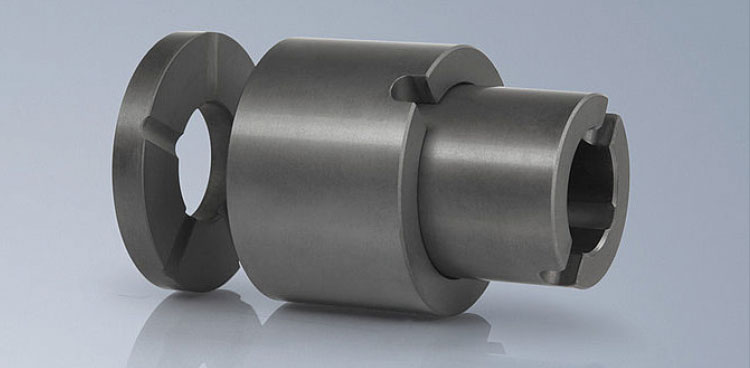
Advancements in Sliding Bearing Technology
Recent years have witnessed significant advancements in sliding bearing technology, leading to improved performance, durability, and efficiency in various applications. Some notable developments include:
Self-Lubricating Materials: The use of advanced self-lubricating materials, such as composite polymers and solid lubricants, has reduced the need for external lubrication, enhancing maintenance-free operation.
Nano-Coatings: Nano-coatings with improved wear resistance and reduced friction have been applied to sliding bearings, extending their lifespan and optimizing performance in demanding environments.
Improved Friction Management: Advanced surface texturing and micro-grooving techniques have been employed to manage friction and reduce wear, contributing to smoother operation and increased efficiency.
Bearing Monitoring Systems: Integration of sensors and monitoring systems allows real-time tracking of bearing health, enabling predictive maintenance and reducing unexpected downtime.
Customization: Modern manufacturing techniques, such as 3D printing and precision machining, allow for customized sliding bearings tailored to specific applications, improving overall system performance.
Environmentally Friendly Solutions: Development of environmentally friendly lubricants and materials ensures compliance with regulations and minimizes the impact of sliding bearing technology on the environment.
High-Load Capacities: Advances in material science and engineering have led to sliding bearings with increased load-carrying capacities, making them suitable for heavy-duty applications.
Enhanced Wear Resistance: Improved material compositions and surface treatments have enhanced wear resistance, reducing the need for frequent replacements and maintenance.
Reduced Noise and Vibration: Innovations in design and materials have resulted in sliding bearings that produce less noise and vibration, contributing to quieter and more comfortable machinery operation.
Integration with IoT: Integration of sliding bearings into the Internet of Things (IoT) networks allows for remote monitoring and optimization of bearing performance.
Digital Twin Technology: Digital twin simulations are being used to model sliding bearing behavior, aiding in design optimization and performance prediction.
Efficiency in High-Temperature Environments: Advancements in heat-resistant materials have enabled sliding bearings to operate efficiently in high-temperature industrial applications.
These advancements collectively contribute to the evolution of sliding bearing technology, making them more reliable, durable, and adaptable to a wide range of industrial and commercial applications.
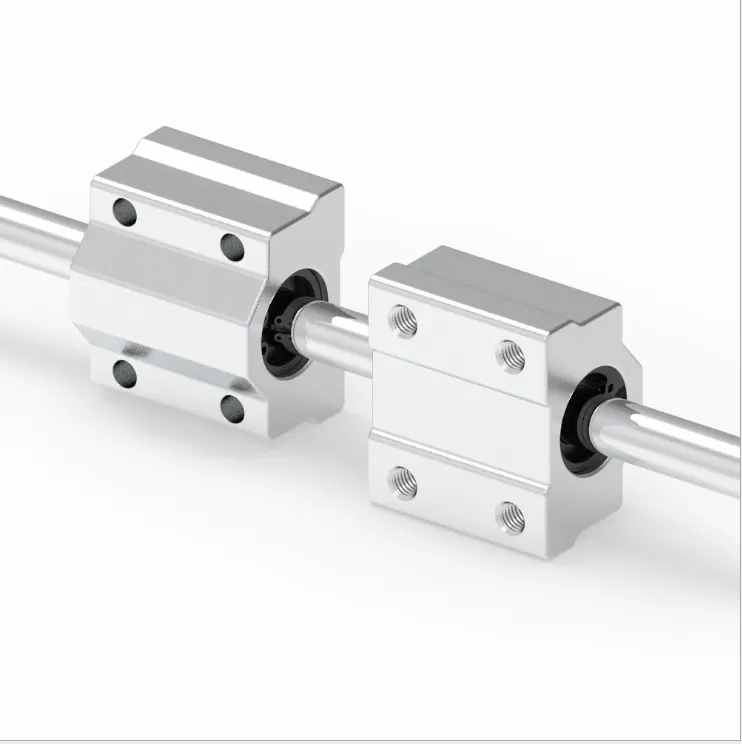
Impact of Materials on Sliding Bearing Performance and Durability
The choice of materials used in sliding bearings significantly influences their performance, longevity, and suitability for specific applications. Different materials offer varying characteristics that affect factors such as friction, wear resistance, load capacity, and corrosion resistance. Here are some common materials and their effects:
- Bronze Bearings: Bronze bearings, often made from bronze alloys, offer good load-carrying capacity and resistance to wear. They are suitable for applications with moderate to heavy loads and low to moderate speeds. Bronze bearings also have good heat dissipation properties.
- Steel Bearings: Steel bearings, particularly those made from stainless steel, provide excellent corrosion resistance and are suitable for applications exposed to harsh environments or moisture. Steel bearings are often used in marine and food processing industries.
- Polymer Bearings: Polymer bearings, such as those made from materials like PTFE (polytetrafluoroethylene) or nylon, offer low friction and self-lubricating properties. They are suitable for applications where minimizing friction and wear is critical.
- Composite Bearings: Composite bearings combine different materials to achieve specific performance characteristics. For instance, they might feature a polymer matrix with embedded reinforcing fibers for improved load capacity and wear resistance.
- Graphite Bearings: Bearings with graphite as a lubricating element can operate without additional lubrication in certain conditions, reducing maintenance needs and offering self-lubricating properties.
The selection of materials should consider factors such as the application’s operating conditions, load requirements, speed, temperature, and the presence of corrosive substances. The right material choice ensures optimal performance, durability, and minimal maintenance for sliding bearings.
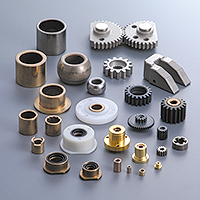
Sliding Bearings and Their Applications
Sliding bearings, also known as plain bearings or journal bearings, are a type of bearing that operate on the principle of sliding friction between two surfaces. They are utilized in various applications where rotational or linear movement needs to be facilitated while minimizing friction and wear. Here are some common applications of sliding bearings:
- Automotive Industry: Sliding bearings are widely used in engines and transmissions of vehicles to support rotating shafts and provide low-friction movement.
- Industrial Machinery: They are employed in industrial equipment such as pumps, compressors, and turbines, where they help in reducing friction and ensuring smooth operation.
- Aerospace: Sliding bearings are crucial components in aircraft engines, landing gear systems, and various aerospace mechanisms to provide reliable and low-wear motion.
- Power Generation: In power plants, sliding bearings are found in turbines, generators, and other rotating equipment to facilitate movement with minimal energy loss.
- Marine Applications: They are used in ship engines, propellers, and other marine equipment, providing durability in harsh marine environments.
- Construction Equipment: Sliding bearings are used in construction machinery like cranes and excavators to support heavy loads and ensure smooth movement.
- Heavy Industry: Various heavy industries, including mining and steel production, rely on sliding bearings for their robustness and ability to handle heavy loads.
- Home Appliances: Sliding bearings are found in appliances like washing machines and refrigerators, facilitating the movement of rotating parts.
- Medical Devices: Some medical devices use sliding bearings for their precision and low friction, ensuring accurate movement in equipment like medical scanners and robotic surgical systems.
Sliding bearings are chosen for applications where simplicity, cost-effectiveness, and reliable performance are essential. They come in different designs, such as plain cylindrical bearings, thrust bearings, and spherical bearings, to suit various motion requirements. Regular maintenance and proper lubrication are necessary to ensure the longevity and optimal performance of sliding bearings in their respective applications.


editor by CX 2024-04-08