
Product Description
Product Description
Spherical plain bearings are used for applications requiring rotation and oscillation. The rotation takes place on a sliding
surface so the limiting speed is slow.
We can supply high quality and almost all types of spherical plain bearing,
- Radial Spherical Plain Bearings
- Angular Contact Spherical Plain Bearings
- Thrust Spherical Plain Bearings
- Non-standard Spherical Plain Bearings
The main series including: GE…ES, GE…ES-2RS, GEZ…ES, GEZ…ES-2RS, GEG…ES, GEG…ES-2RS, GE…LO, GE…HO-2RS, GE…UK, GE…FW, GE…UK-2RS, GE…FW-2RS, GAC, GX…T.
Applications:
Railway engineering
Railway station construction
Bridge building
Construction machinery
Hydraulic steel structures
Roof designs
Power generation
Oil field exploration
Mining and aggregate processing
Wind turbines
Gear drives
Rolling mills
Product Parameters
Technical specification
Inch Size Angular Contact Spherical Plain Bearings GACZ..S,same characteristics with GAC..S.
Here is the comparison between each standard organization:
ABEC-1, ABEC-3, ABEC-5, ABEC-7, ABEC-9, the larger the number, the higher the precision grade.
| ANSI Standard* | DIN 620* | ISO 492* |
| ABEC 1 | P0 | Class Normal |
| ABEC 3 | P6 | Class 6 |
| ABEC 5 | P5 | Class 5 |
| ABEC 7 | P4 | Class 4 |
| ABEC 9 | P2 | Class 2 |
Specifications:
1) Sliding contact surfaces: Steel vs. Steel.
2) Materials: Both outer race and inner race are made of high chrome bearing steel.
3) Heat treatment: Both outer race and inner race are quenched (hardened), surface phosphorized.
4) Features of structure: With oil groove and oil holes in outer race.
5) Lubricant: molybdenum disulfide.
6) Properties: Good wearability, corrosion resistance, self-alignment.
| Bearing No. | Dimensions (mm) | Mass | |||||
| d | D | T | B | C | dK | kg | |
| GACZ12S | 12.7 | 22.225 | 6.86 | 4.83 | 7.62 | 18.26 | 0.013 |
| GACZ15S | 15.875 | 26.988 | 8.64 | 6.35 | 9.4 | 22.83 | 0.571 |
| GACZ19S | 19.05 | 31.75 | 10.41 | 7.87 | 11.18 | 27.43 | 0.038 |
| GACZ22S | 22.225 | 36.512 | 12.19 | 9.65 | 13.21 | 31.95 | 0.049 |
| GACZ25S | 25.4 | 41.275 | 13.97 | 11.18 | 15.24 | 36.5 | 0.085 |
| GACZ31S | 31.75 | 50.8 | 17.78 | 13.97 | 18.8 | 45.59 | 0.159 |
| GACZ34S | 34.925 | 55.562 | 19.56 | 15.24 | 21.34 | 49.2 | 0.213 |
| GACZ38S | 38.1 | 61.912 | 21.34 | 16.76 | 23.11 | 54.75 | 0.301 |
| GACZ44S | 44.45 | 71.438 | 24.89 | 20.07 | 27.18 | 63.88 | 0.458 |
| GACZ50S | 50.8 | 80.962 | 28.7 | 13.37 | 31.24 | 73.02 | 0.671 |
| GACZ57S | 57.15 | 90.488 | 32.26 | 26.67 | 35.31 | 82.17 | 0.948 |
| GACZ63S | 63.5 | 100.013 | 36.07 | 29.97 | 39.12 | 91.19 | 1.13 |
| GACZ69S | 69.85 | 111.125 | 39.62 | 32.38 | 43.18 | 100.33 | 1.75 |
| GACZ76S | 76.2 | 120.65 | 43.43 | 35.69 | 47.24 | 109.52 | 2.28 |
| GACZ82S | 82.55 | 130.175 | 47.24 | 39.24 | 51.56 | 118.74 | 2.89 |
| GACZ88S | 88.9 | 139.7 | 50.8 | 42.54 | 55.37 | 128.02 | 3.57 |
| GACZ95S | 95.25 | 149.225 | 54.61 | 45.85 | 59.44 | 136.91 | 4.35 |
| GACZ101S | 101.6 | 158.75 | 58.42 | 49.15 | 63.5 | 146.05 | 5.26 |
| GACZ114S | 114.3 | 177.8 | 65.79 | 55.75 | 71.12 | 164.46 | 7.76 |
| GACZ127S | 127 | 196.85 | 73.15 | 62.36 | 79.5 | 182.63 | 11.07 |
| GACZ152S | 152.4 | 222.25 | 78.74 | 66.42 | 85.72 | 207.16 | 17.3 |
Packaging & Shipping
Our Advantages
1. We have over 10 years’ experience.
2. OEM or Non-Standard Bearings: Any requirement for Non-standard bearings is easily fulfilled by us due to our vast knowledge and links in the industry.
3. After Sales Service and Technical Assistance: Our company provides after-sales service and technical assistance as per the customer’s requirements and needs.
4. Quick Delivery: Our company provides just-in-time delivery with our streamlined supply chain.
5.We attend promptly to any customer questions. We believe that if our customers are satisfied then it proves our worth. Our customers are always given quick support.
Please contact us immediately if you have any questions.
Related Products
/* January 22, 2571 19:08:37 */!function(){function s(e,r){var a,o={};try{e&&e.split(“,”).forEach(function(e,t){e&&(a=e.match(/(.*?):(.*)$/))&&1
| Rolling Element: | Single Row |
|---|---|
| Material: | Bearing Steel |
| Load Direction: | Radial Spherical Plain Bearing |
| Customization: |
Available
| Customized Request |
|---|
.shipping-cost-tm .tm-status-off{background: none;padding:0;color: #1470cc}
| Shipping Cost:
Estimated freight per unit. |
about shipping cost and estimated delivery time. |
|---|
| Payment Method: |
|
|---|---|
|
Initial Payment Full Payment |
| Currency: | US$ |
|---|
| Return&refunds: | You can apply for a refund up to 30 days after receipt of the products. |
|---|
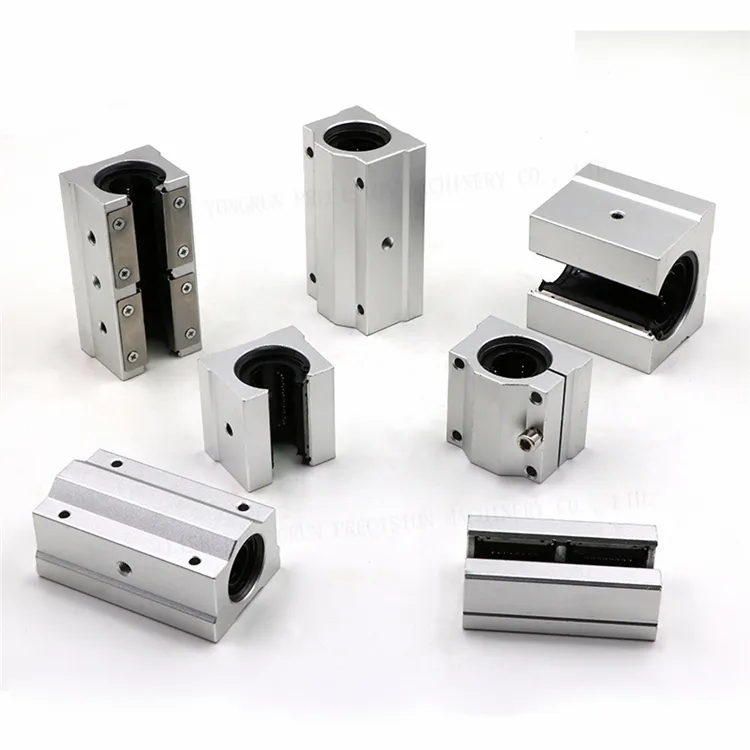
Considerations for Selecting Appropriate Sliding Bearings
Choosing the right type and size of sliding bearing is crucial for ensuring optimal performance and longevity in various applications. Here are key considerations to keep in mind:
Load and Application: Determine the specific load and application requirements. Different sliding bearings are designed to handle varying loads, speeds, and operating conditions. Consider whether the bearing will experience radial, axial, or combined loads, as well as the expected range of motion.
Material Compatibility: Select materials that are compatible with the operating environment. Consider factors such as corrosion resistance, temperature tolerance, and exposure to chemicals or contaminants. Common bearing materials include bronze, steel, and self-lubricating polymers.
Lubrication: Proper lubrication is essential for reducing friction and wear in sliding bearings. Choose a lubrication method that suits the application, whether it’s grease, oil, or self-lubricating materials. Some sliding bearings are designed for maintenance-free operation.
Design and Configuration: Determine the appropriate bearing design, such as bushings, thrust washers, or linear guides. Consider the bearing’s dimensions, including inner and outer diameter, length, and width. The bearing’s configuration should match the available space and mounting requirements.
Load Distribution: Ensure that the selected sliding bearing can evenly distribute the applied load across its surface. This helps prevent premature wear and ensures the bearing’s longevity. Consider the bearing’s load capacity and how it aligns with the actual load demands.
Friction and Wear: Evaluate the bearing’s coefficient of friction and wear characteristics. Lower friction and wear rates contribute to longer bearing life and improved efficiency. Consider whether the bearing requires initial running-in to reach optimal performance.
Maintenance and Service Life: Consider the maintenance requirements and expected service life of the sliding bearing. Some applications may benefit from bearings with extended maintenance intervals or self-lubricating properties, while others may prioritize easy replacement.
Cost-Efficiency: Balancing performance with cost is essential. While high-performance materials and features can enhance bearing performance, they may also increase the upfront cost. Choose a solution that aligns with your budget and long-term operational goals.
Environmental Conditions: Factor in the environmental conditions the bearing will operate in. For example, marine environments may require bearings with exceptional corrosion resistance, while high-temperature applications demand materials with thermal stability.
Supplier Expertise: Partner with reputable suppliers who offer technical expertise and a range of sliding bearing solutions. Suppliers with a strong track record can provide guidance in selecting the most suitable bearing for your specific application.
By carefully considering these factors, you can confidently choose the appropriate type and size of sliding bearing that meets your application’s requirements and ensures optimal performance and reliability.
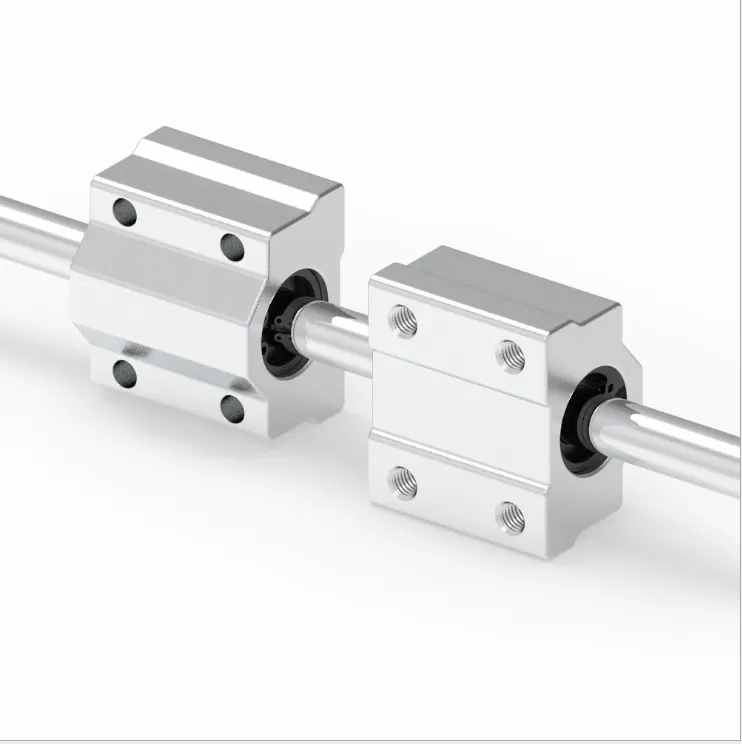
Impact of Materials on Sliding Bearing Performance and Durability
The choice of materials used in sliding bearings significantly influences their performance, longevity, and suitability for specific applications. Different materials offer varying characteristics that affect factors such as friction, wear resistance, load capacity, and corrosion resistance. Here are some common materials and their effects:
- Bronze Bearings: Bronze bearings, often made from bronze alloys, offer good load-carrying capacity and resistance to wear. They are suitable for applications with moderate to heavy loads and low to moderate speeds. Bronze bearings also have good heat dissipation properties.
- Steel Bearings: Steel bearings, particularly those made from stainless steel, provide excellent corrosion resistance and are suitable for applications exposed to harsh environments or moisture. Steel bearings are often used in marine and food processing industries.
- Polymer Bearings: Polymer bearings, such as those made from materials like PTFE (polytetrafluoroethylene) or nylon, offer low friction and self-lubricating properties. They are suitable for applications where minimizing friction and wear is critical.
- Composite Bearings: Composite bearings combine different materials to achieve specific performance characteristics. For instance, they might feature a polymer matrix with embedded reinforcing fibers for improved load capacity and wear resistance.
- Graphite Bearings: Bearings with graphite as a lubricating element can operate without additional lubrication in certain conditions, reducing maintenance needs and offering self-lubricating properties.
The selection of materials should consider factors such as the application’s operating conditions, load requirements, speed, temperature, and the presence of corrosive substances. The right material choice ensures optimal performance, durability, and minimal maintenance for sliding bearings.
Sliding Bearings and Their Applications
Sliding bearings, also known as plain bearings or journal bearings, are a type of bearing that operate on the principle of sliding friction between two surfaces. They are utilized in various applications where rotational or linear movement needs to be facilitated while minimizing friction and wear. Here are some common applications of sliding bearings:
- Automotive Industry: Sliding bearings are widely used in engines and transmissions of vehicles to support rotating shafts and provide low-friction movement.
- Industrial Machinery: They are employed in industrial equipment such as pumps, compressors, and turbines, where they help in reducing friction and ensuring smooth operation.
- Aerospace: Sliding bearings are crucial components in aircraft engines, landing gear systems, and various aerospace mechanisms to provide reliable and low-wear motion.
- Power Generation: In power plants, sliding bearings are found in turbines, generators, and other rotating equipment to facilitate movement with minimal energy loss.
- Marine Applications: They are used in ship engines, propellers, and other marine equipment, providing durability in harsh marine environments.
- Construction Equipment: Sliding bearings are used in construction machinery like cranes and excavators to support heavy loads and ensure smooth movement.
- Heavy Industry: Various heavy industries, including mining and steel production, rely on sliding bearings for their robustness and ability to handle heavy loads.
- Home Appliances: Sliding bearings are found in appliances like washing machines and refrigerators, facilitating the movement of rotating parts.
- Medical Devices: Some medical devices use sliding bearings for their precision and low friction, ensuring accurate movement in equipment like medical scanners and robotic surgical systems.
Sliding bearings are chosen for applications where simplicity, cost-effectiveness, and reliable performance are essential. They come in different designs, such as plain cylindrical bearings, thrust bearings, and spherical bearings, to suit various motion requirements. Regular maintenance and proper lubrication are necessary to ensure the longevity and optimal performance of sliding bearings in their respective applications.


editor by CX 2024-04-11