
Product Description
Oilless Sliding Wear Plate #500SP Graphite Plugged Bearing
|
Material |
CuZn25Al5Mn4Fe3 |
|
Typical Application |
consecutive casting and rolling machines, mine-exploiting equipments, ships, steam engine, etc. |
|
Density g/cm3 |
8 |
|
Hardness HB |
>210 |
|
Tensile Strength N/mm² |
>750 |
|
Yeild strength N/mm² |
>340 |
|
Elongation % |
>12 |
|
Coefficient of linear expansion 10-5/ºC |
2.2 |
|
Heat-conducting Coefficient W(/m.k) |
38~55 |
|
Flexibility Coefficient KN/mm² |
100~140 |
|
Temp. Limits ºC |
-40~+200 |
|
Max. Dynamic Load N/mm² |
98 |
|
Max.speed m/s |
Dry Lubrication 0.3; Oil Lubrication 1.0 |
|
Max.PV N/mm²*m/s |
Dry Lubrication 1.65; Oil Lubrication 3.25 |
|
Friction |
Dry Lubrication 0.12~0.16; Oil Lubrication 0.03~0.08 |
|
W e can also develop according to customers special request while out of this table |
|
Packing & Shipping
Packing Details:
1. Inner Packing
For small products: 100pcs-200pcs per sealed plastic bag. For bigger products: 2pcs-10pcs per plastic film roller (depends on the product size)
2. Outer Packing&Shipment Packing
8pcs-300pcs per carton (depends on the product size)
18-24 cartons per wood case or pallet, shockproof and safe for transportation.
Company Profile
Our Factory
FAQ
Q: Are you trading company or manufacturer?
A: Our management is focused on exporting activities for more than 10 years and we have our own bushing factory. TEHCO is always professional and reliable. Our advantages are multiple resource integration, strong quality assurance and excellent service level. We are always responsible for our products.
Q: Hong long is your delivery time?
A: Generally 10-25 days after order. It depends on the quantity.
Q: Do you produce samples? Is it free or extra?
A: For standard products, we produce samples free of charge for our customers. And the express costs will be burdened by the customer, but can be returned after the order is placed.
Q: How to ensure the quality?
A: We produce as per the confirmed technology or drawings for each order for our customers. And our factory has a strict quality control system. We inspect goods during production according to a certain frequency and we also perform the final inspection before the goods are packed.
Q: Do you like to serve the customers only with small orders?
A: We are always glad to grow up together with all our customers whatever big or small.
We hope our customers become stronger and stronger to be with us.
/* January 22, 2571 19:08:37 */!function(){function s(e,r){var a,o={};try{e&&e.split(“,”).forEach(function(e,t){e&&(a=e.match(/(.*?):(.*)$/))&&1
| Customized: | Customized |
|---|---|
| Certification: | ISO, ISO 9001:2015 |
| Standard Parts: | Standard and Non Standard |
| Customization: |
Available
| Customized Request |
|---|
.shipping-cost-tm .tm-status-off{background: none;padding:0;color: #1470cc}
| Shipping Cost:
Estimated freight per unit. |
about shipping cost and estimated delivery time. |
|---|
| Payment Method: |
|
|---|---|
|
Initial Payment Full Payment |
| Currency: | US$ |
|---|
| Return&refunds: | You can apply for a refund up to 30 days after receipt of the products. |
|---|
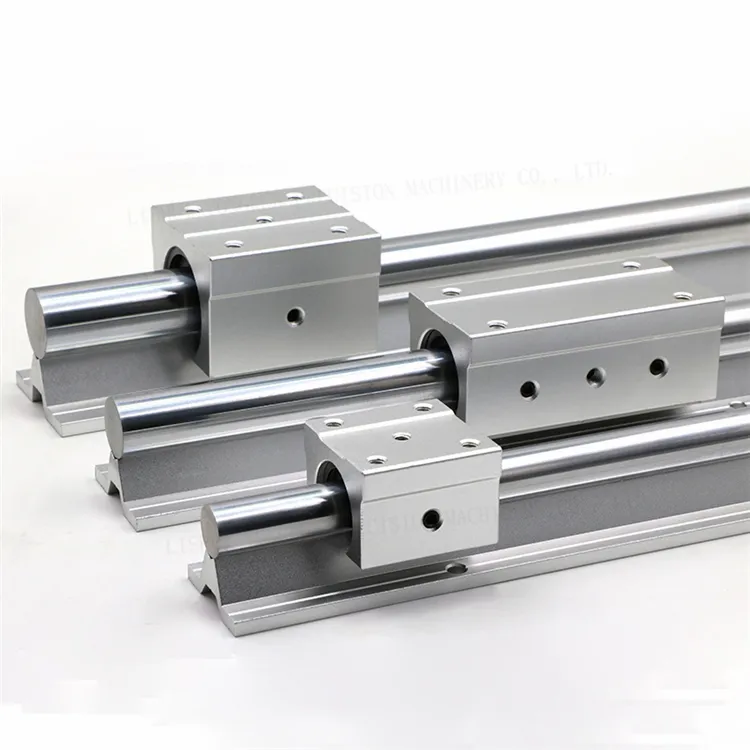
Differences Between Plain Sliding Bearings and Self-Lubricating Bearings
Plain sliding bearings and self-lubricating bearings are two distinct types of bearings used in various applications. Here are the key differences between them:
Plain Sliding Bearings:
- Plain sliding bearings, also known as bushings, are simple bearing components that consist of a cylindrical sleeve made of a bearing material.
- These bearings require external lubrication, such as grease or oil, to reduce friction and wear between the bearing and the shaft.
- Regular maintenance and lubrication are essential to ensure proper operation and longevity.
- Plain sliding bearings are cost-effective and suitable for applications where lubrication can be easily provided.
- They are commonly used in low-speed and low-load applications, where the shaft slides within the bearing.
Self-Lubricating Bearings:
- Self-lubricating bearings, also known as maintenance-free bearings, are designed to operate without the need for external lubrication.
- These bearings incorporate solid lubricants, such as graphite, PTFE (polytetrafluoroethylene), or other additives, directly into the bearing material.
- The solid lubricants are released gradually as the bearing operates, reducing friction and providing a consistent lubricating film.
- Self-lubricating bearings are ideal for applications where frequent maintenance or lubrication is impractical or not feasible.
- They are suitable for both low-load and high-load applications, as the self-lubricating properties help extend the bearing’s service life.
In summary, plain sliding bearings require external lubrication and are suitable for applications where lubrication can be provided, while self-lubricating bearings incorporate solid lubricants and operate without the need for regular maintenance. The choice between these two types depends on factors such as the application’s operating conditions, maintenance requirements, and budget considerations.
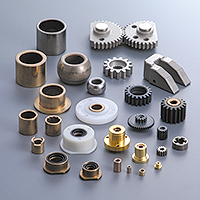
Managing Friction and Wear in Sliding Bearings
Friction and wear are common challenges in sliding bearings that can lead to reduced performance and premature failure. Here’s a detailed look at these challenges and some solutions to manage them:
Challenges:
- Friction: High friction can lead to energy loss, increased heat generation, and accelerated wear.
- Wear: Continuous contact between sliding surfaces can result in material removal and surface degradation over time.
Solutions:
- Lubrication: Proper lubrication is crucial to reduce friction and wear. Lubricants create a protective film between sliding surfaces, minimizing direct contact and promoting smooth movement.
- Self-Lubricating Bearings: Bearings made from self-lubricating materials, such as polymers containing solid lubricants, can offer continuous lubrication without external intervention.
- Bearing Design: Optimized bearing designs, such as incorporating grooves or pockets for lubricant retention, can enhance lubrication efficiency and reduce friction.
- Maintenance: Regular maintenance and lubricant replenishment help ensure consistent lubrication levels and prevent excessive wear.
- Material Selection: Choosing materials with low friction coefficients and high wear resistance can minimize friction and extend bearing life.
- Surface Treatments: Coatings, such as PTFE or DLC (diamond-like carbon), can be applied to bearing surfaces to reduce friction and enhance wear resistance.
- Clearance Adjustment: Proper clearance between bearing components can reduce friction and prevent excessive loading.
By implementing effective lubrication strategies, choosing appropriate materials, and employing suitable design practices, the challenges of friction and wear in sliding bearings can be effectively managed, leading to improved performance and longer bearing life.
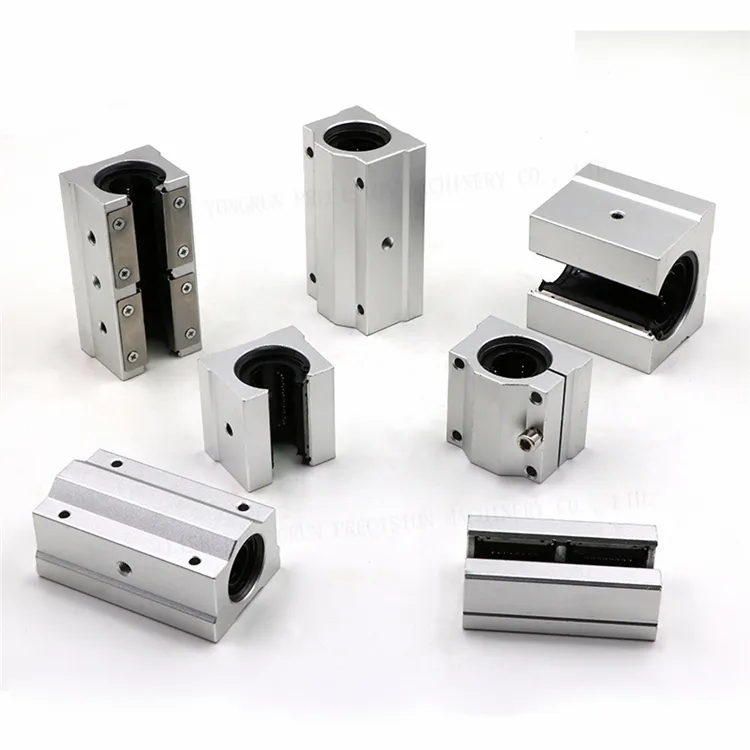
Common Applications and Industries of Sliding Bearings
Sliding bearings are utilized across a wide range of applications and industries due to their unique advantages. Some common applications and industries where sliding bearings are commonly used include:
- Automotive Industry: Sliding bearings are found in engines, transmissions, suspension systems, and various automotive components.
- Industrial Machinery: They are used in manufacturing equipment, conveyors, printing machines, and more.
- Power Generation: Sliding bearings are crucial in turbines, generators, and power transmission systems.
- Aerospace: They play a role in aircraft landing gear, control systems, and propulsion mechanisms.
- Marine: Sliding bearings are used in ship engines, propellers, and steering systems.
- Construction and Mining: They are found in heavy machinery, excavators, loaders, and construction equipment.
- Oil and Gas: Sliding bearings are used in drilling rigs, pumps, compressors, and refineries.
- Railway: They are employed in locomotives, train wheels, and rail systems.
- Medical Equipment: Sliding bearings are used in medical devices, imaging equipment, and surgical instruments.
- Textile Industry: They play a role in weaving machines, spinning frames, and looms.
- Food and Beverage: Sliding bearings are utilized in food processing equipment and packaging machinery.
- Renewable Energy: They are used in wind turbines, solar tracking systems, and other renewable energy applications.
Sliding bearings provide reliable support and smooth motion in various environments, making them essential components in a wide range of industries.


editor by CX 2024-03-25