
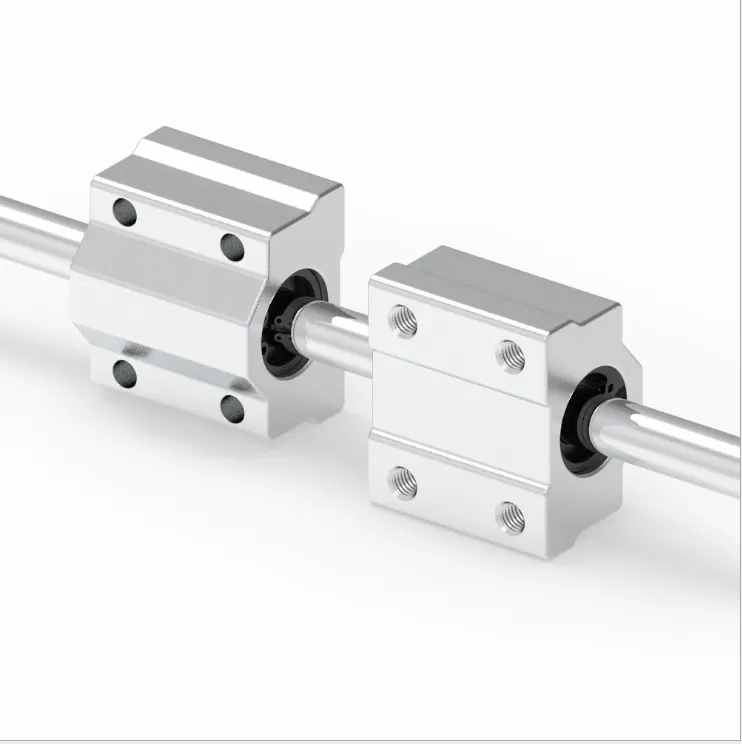
Improvement of Heavy Machinery Operation with Sliding Bearings
Sliding bearings play a crucial role in enhancing the operation of heavy machinery, such as mining equipment. Here’s how they contribute:
Reduced Friction and Wear:
Sliding bearings are designed to minimize friction between moving parts. In heavy machinery, where components are subjected to substantial loads and harsh conditions, reducing friction is essential to prevent premature wear and damage. Sliding bearings help distribute loads evenly and provide a smooth surface for components to slide against, reducing the risk of friction-induced failures.
Increased Durability:
The robust construction and materials used in sliding bearings make them well-suited for heavy machinery applications. They can withstand the heavy loads, impacts, and vibrations commonly encountered in mining equipment. Their durability contributes to the overall reliability and longevity of the machinery.
Improved Efficiency:
Efficiency is critical in heavy machinery to maximize productivity while minimizing energy consumption. Sliding bearings contribute to improved efficiency by reducing energy losses due to friction. With lower friction, machinery components can move more freely, requiring less energy to overcome resistance.
Resistance to Contaminants:
Mining environments are often filled with dust, dirt, and debris that can infiltrate machinery components. Sliding bearings are designed to operate effectively even in contaminated conditions. Their design and materials help prevent the intrusion of contaminants, reducing the risk of premature wear and component failure.
Enhanced Load Distribution:
Heavy machinery, especially in mining, experiences dynamic and uneven loads. Sliding bearings help distribute these loads evenly across surfaces, preventing localized stress concentrations. This load distribution contributes to the machinery’s overall structural integrity and minimizes the risk of catastrophic failures.
In conclusion, sliding bearings are integral to the efficient and reliable operation of heavy machinery in industries like mining. Their ability to reduce friction, enhance durability, improve efficiency, resist contaminants, and distribute loads makes them invaluable components for ensuring the smooth functioning of mining equipment.
Impact of Materials on Sliding Bearing Performance and Durability
The choice of materials used in sliding bearings significantly influences their performance, longevity, and suitability for specific applications. Different materials offer varying characteristics that affect factors such as friction, wear resistance, load capacity, and corrosion resistance. Here are some common materials and their effects:
- Bronze Bearings: Bronze bearings, often made from bronze alloys, offer good load-carrying capacity and resistance to wear. They are suitable for applications with moderate to heavy loads and low to moderate speeds. Bronze bearings also have good heat dissipation properties.
- Steel Bearings: Steel bearings, particularly those made from stainless steel, provide excellent corrosion resistance and are suitable for applications exposed to harsh environments or moisture. Steel bearings are often used in marine and food processing industries.
- Polymer Bearings: Polymer bearings, such as those made from materials like PTFE (polytetrafluoroethylene) or nylon, offer low friction and self-lubricating properties. They are suitable for applications where minimizing friction and wear is critical.
- Composite Bearings: Composite bearings combine different materials to achieve specific performance characteristics. For instance, they might feature a polymer matrix with embedded reinforcing fibers for improved load capacity and wear resistance.
- Graphite Bearings: Bearings with graphite as a lubricating element can operate without additional lubrication in certain conditions, reducing maintenance needs and offering self-lubricating properties.
The selection of materials should consider factors such as the application’s operating conditions, load requirements, speed, temperature, and the presence of corrosive substances. The right material choice ensures optimal performance, durability, and minimal maintenance for sliding bearings.
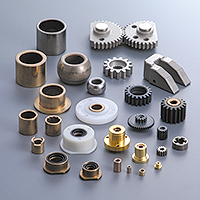
Sliding Bearings and Their Applications
Sliding bearings, also known as plain bearings or journal bearings, are a type of bearing that operate on the principle of sliding friction between two surfaces. They are utilized in various applications where rotational or linear movement needs to be facilitated while minimizing friction and wear. Here are some common applications of sliding bearings:
- Automotive Industry: Sliding bearings are widely used in engines and transmissions of vehicles to support rotating shafts and provide low-friction movement.
- Industrial Machinery: They are employed in industrial equipment such as pumps, compressors, and turbines, where they help in reducing friction and ensuring smooth operation.
- Aerospace: Sliding bearings are crucial components in aircraft engines, landing gear systems, and various aerospace mechanisms to provide reliable and low-wear motion.
- Power Generation: In power plants, sliding bearings are found in turbines, generators, and other rotating equipment to facilitate movement with minimal energy loss.
- Marine Applications: They are used in ship engines, propellers, and other marine equipment, providing durability in harsh marine environments.
- Construction Equipment: Sliding bearings are used in construction machinery like cranes and excavators to support heavy loads and ensure smooth movement.
- Heavy Industry: Various heavy industries, including mining and steel production, rely on sliding bearings for their robustness and ability to handle heavy loads.
- Home Appliances: Sliding bearings are found in appliances like washing machines and refrigerators, facilitating the movement of rotating parts.
- Medical Devices: Some medical devices use sliding bearings for their precision and low friction, ensuring accurate movement in equipment like medical scanners and robotic surgical systems.
Sliding bearings are chosen for applications where simplicity, cost-effectiveness, and reliable performance are essential. They come in different designs, such as plain cylindrical bearings, thrust bearings, and spherical bearings, to suit various motion requirements. Regular maintenance and proper lubrication are necessary to ensure the longevity and optimal performance of sliding bearings in their respective applications.


editor by CX 2024-04-09